Wondering why one Aurora home has a wraparound porch and detailed trim, while another offers a ranch layout or a newer townhome design? That range is one of Aurora’s biggest strengths. If you are trying to figure out which home style fits your budget, maintenance goals, and daily life, this guide will help you sort through the city’s housing mix with more confidence. Let’s dive in.
Why Aurora Has So Many Home Styles
Aurora is not a one-style market. The city began as a Fox River settlement in 1834, incorporated in 1857, and today stretches across four counties. That long growth pattern helps explain why you can find historic homes, early-20th-century architecture, postwar neighborhoods, and newer planned developments all within one city.
Aurora’s scale also matters when you start your search. Current Census QuickFacts show 65,480 housing units, a 66.4% owner-occupied rate, and a $274,800 median value for owner-occupied homes. In practical terms, that means you are shopping in a large, varied market where home style can change a lot from one area to the next.
Historic Aurora Homes
If you love older architecture, Aurora gives you plenty to explore. The city’s architectural portrait pages document a wide mix of historic styles across areas such as the West Side, Tanner, Stolp Island, Near Eastside, Palace Street, Riddle Highlands, Downer Place West, and Near Northwest.
These areas include homes from different eras, which is why the streetscape can feel layered and distinctive. You may see ornate Victorian details on one block, then more grounded Prairie or Craftsman features nearby. That variety is a big part of Aurora’s appeal for buyers who want character.
Queen Anne and Victorian Features
Queen Anne and Victorian homes are some of the most visually detailed properties in Aurora. These homes often include irregular shapes, wraparound porches, turrets, bay windows, and patterned shingles. Compared with later suburban housing, they usually show more ornament and a stronger sense of individuality.
For buyers, that can mean a home with standout curb appeal and a memorable architectural look. It can also mean more variation in upkeep, materials, and updates from one property to another. If charm is high on your list, this style is often worth a close look.
Prairie, Craftsman, and Bungalow Homes
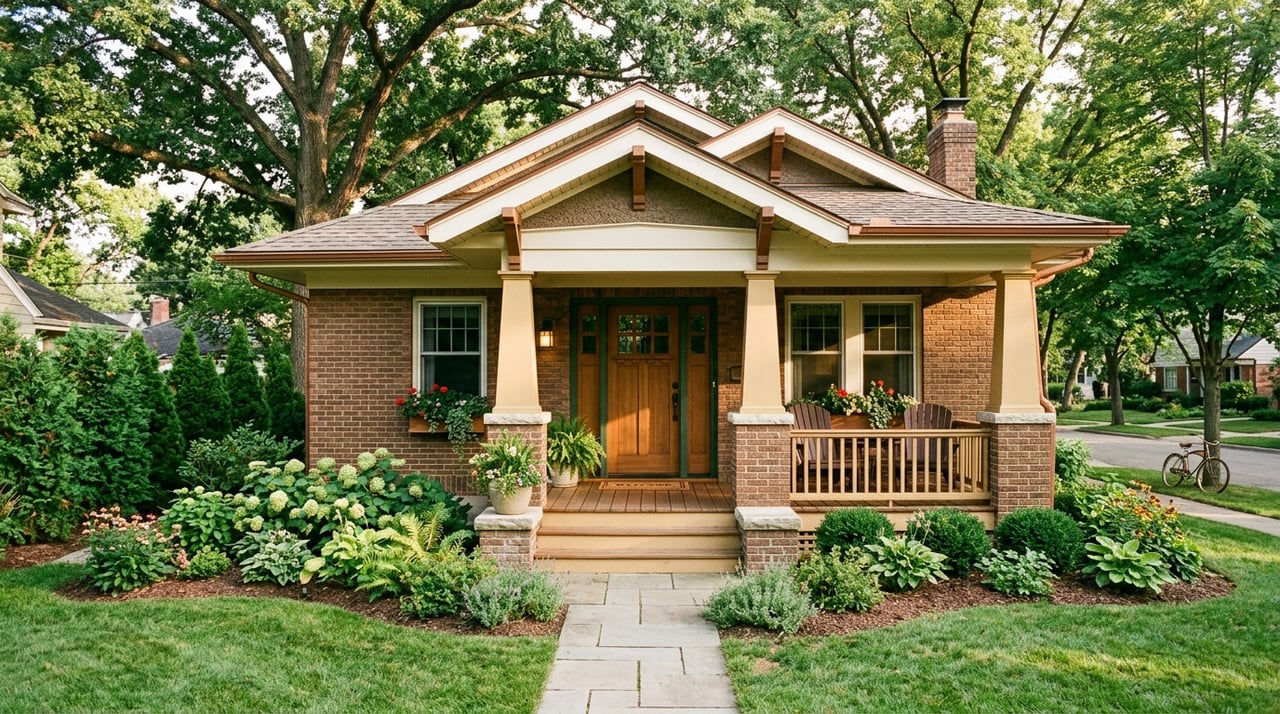
Aurora also has Prairie School, Craftsman, and bungalow homes in its older neighborhoods. These homes typically feature low-pitched roofs, broad eaves, strong horizontal lines, and recessed or full porches. The overall look is often more grounded and less ornate than a Victorian home.
Many buyers like these styles because they combine character with a practical feel. The design details are still distinctive, but the exterior is often simpler and easier to read. If you want an older home without as much decorative flair, this group can be a strong match.
Revival Styles Across Aurora
Colonial Revival, Dutch Colonial Revival, and Tudor Revival homes appear in Aurora from the 1910s through the 1930s. These properties often feature steeper roofs, gambrel forms, half-timbering, brick or stone exteriors, and more formal front elevations.
These homes can appeal to buyers who want a traditional look with strong architectural identity. They often feel more symmetrical or structured than Victorian homes. In Aurora, they add another layer to the city’s already broad housing mix.
Sears Homes and Early Practical Housing
Aurora’s city history notes more than 140 Sears homes. These were ready-to-assemble houses sold by catalog, and they help explain why some older neighborhoods feel compact yet still architecturally distinct.
For buyers, this is an interesting part of Aurora’s housing story. These homes may not always look dramatic from the street, but they often carry historic interest and recognizable early residential design. In a city with many housing eras, they are another reason older blocks can feel unique.
Mid-Century and Postwar Homes
After World War II, Aurora saw a major housing push. The city’s history page says local contractors increased from only three in the late 1930s to more than 69 in the late 1950s. That growth helped shape the city’s stock of ranch homes, Cape Cods, and modern postwar houses.
This era introduced homes that are generally less ornate than Aurora’s oldest properties. At the same time, they often offer layouts and features that feel easier for today’s buyers to use. If you want some character without taking on a much older house, this part of the market may deserve your attention.
What Mid-Century Homes Feel Like
Aurora’s mid-century examples include Lustron all-steel houses, 1951 to 1956 modern homes, and architect-designed residences with open plans, full-height windows, built-in storage, and flatter rooflines. Riddle Highlands and Downer Place West also show ranch homes, Cape Cods, and other 1940s to 1950s forms layered into earlier neighborhoods.
For many buyers, the appeal here is balance. These homes tend to have simpler circulation, larger openings, and a more straightforward layout than many older homes. That can make them a practical middle ground between architectural charm and manageable upkeep.
Newer Builds and Townhomes
Aurora’s newer housing options reflect a different stage of the city’s growth. The city says its boundaries now run from Route 59 in the east to beyond Orchard Road in the west, and the Far East Side continues adding residential capacity. In practice, that helps explain where newer subdivisions, townhomes, and planned developments are more likely to appear.
If you prefer a more modern layout or a lower-exterior-maintenance setup, newer construction may fit your goals better. These homes are often shaped by current zoning standards and planned-community design. That can create a more consistent look and feel from one property to the next.
What the Zoning Code Suggests
Aurora’s zoning code supports small-lot single-family and attached housing. A front-loaded detached home can be as small as 50 feet of frontage and 4,500 square feet of lot area, while an alley-loaded detached home can go down to 30 feet of frontage and 1,500 square feet. Duplexes can be 3,200 square feet, motor-court lots can be 2,500 square feet, and attached or townhouse lots can be 18 to 20 feet wide with about 1,250 to 1,380 square feet.
The ordinance also emphasizes lot-size variety, open space, low-maintenance materials, and adequate parking. For you as a buyer, that often translates into homes with more standardized parking, less yard to maintain, and layouts designed for efficient use of space. That can be especially appealing if you want newer finishes without the work of a large lot.
How to Compare Aurora Home Styles
The best home style for you depends on how you want to live, not just what looks good in photos. Aurora gives you real choices, but each choice comes with tradeoffs in layout, exterior upkeep, lot size, and neighborhood feel.
A simple way to compare options is to think about your priorities first. Ask yourself whether you care most about architectural detail, low maintenance, a more open layout, or newer construction. Once you know that, the right parts of Aurora become easier to narrow down.
Historic Core Tradeoffs
Older parts of Aurora often attract buyers who want masonry, porches, detailed facades, and an established streetscape. These homes can offer strong visual character and a sense of architectural history that is hard to duplicate.
The tradeoff is that upkeep can vary more from house to house. Materials, systems, and past renovations may differ widely. If you are considering an older home, it helps to evaluate each property on its own condition rather than assume every historic home will function the same way.
Postwar Area Tradeoffs
Postwar neighborhoods often work well for buyers looking for ranch or split-level practicality and simpler rooflines. These homes can offer a comfortable middle ground between the personality of older housing and the simpler forms many buyers want today.
In Aurora, this category can be especially useful if you want a layout that feels more straightforward without moving all the way into a newer subdivision. That balance is a big reason mid-century and postwar homes remain appealing.
New Construction Tradeoffs
Newer homes and townhomes usually appeal to buyers who want lower exterior maintenance, more standardized parking, and a more predictable layout. Depending on the development pattern, you may also find shared drives, alley-loaded access, or smaller private yards.
That setup is not right for everyone, but it can be a great fit if you want to spend less time maintaining the property. In Aurora, the city’s code language around open space, garage placement, and lot-size variety supports that kind of housing choice.
Where Buyers Often Focus
If you want older charm, your search will usually make more sense in Aurora’s historic districts and close-in streets. These are the areas where you are more likely to see Queen Anne, Craftsman, bungalow, Prairie, and Revival-era homes.
If you want newer layouts and a smaller exterior-maintenance burden, the city’s growth edges and newer planned developments may be a better fit. Aurora’s Far East Side is especially tied to ongoing residential capacity, which helps explain why newer products are more common there.
Why Style Matters in Your Search
Home style affects more than appearance. It can shape how the house lives day to day, how much exterior work you may take on, how the lot is configured, and how easy it is to find the features you want.
In Aurora, that matters because inventory can feel dramatically different depending on the part of the city and the price tier you are shopping in. A buyer looking for a turreted historic home and a buyer looking for a newer townhome may both find good options in Aurora, but they are not really shopping the same market. Knowing that early can save you time.
If you are comparing Aurora to nearby suburbs, this range is one of the city’s biggest differentiators. Few communities offer the same blend of riverfront historic homes, early-20th-century neighborhoods, postwar houses, and newer small-lot developments all in one place.
Whether you are drawn to a classic bungalow, a mid-century ranch, or a newer low-maintenance home, the key is matching the property type to your goals. If you want help narrowing down Aurora home styles and finding the right fit for your move, connect with Jeff Stainer.
FAQs
What kinds of home styles can you find in Aurora, IL?
- Aurora includes historic homes, early-20th-century styles, postwar ranch and Cape Cod homes, mid-century modern examples, and newer subdivisions and townhomes.
Where are historic homes located in Aurora, IL?
- Historic styles appear across areas such as the West Side, Tanner, Stolp Island, Near Eastside, Palace Street, Riddle Highlands, Downer Place West, and Near Northwest.
What features define Aurora Victorian and Queen Anne homes?
- These homes often include irregular shapes, wraparound porches, turrets, bay windows, patterned shingles, and more exterior ornament than later suburban homes.
What should you expect from mid-century homes in Aurora, IL?
- Mid-century and postwar homes in Aurora often have simpler layouts, larger openings, flatter rooflines or ranch forms, and a practical balance between character and upkeep.
Where are newer homes and townhomes more common in Aurora, IL?
- Newer housing is generally more aligned with Aurora’s growth edges, especially areas tied to more recent planned development and added residential capacity on the Far East Side.
How do lot sizes differ in newer Aurora housing?
- Aurora’s zoning code allows a range of smaller-lot formats, including front-loaded, alley-loaded, duplex, motor-court, and townhouse configurations designed for efficient land use and lower maintenance.