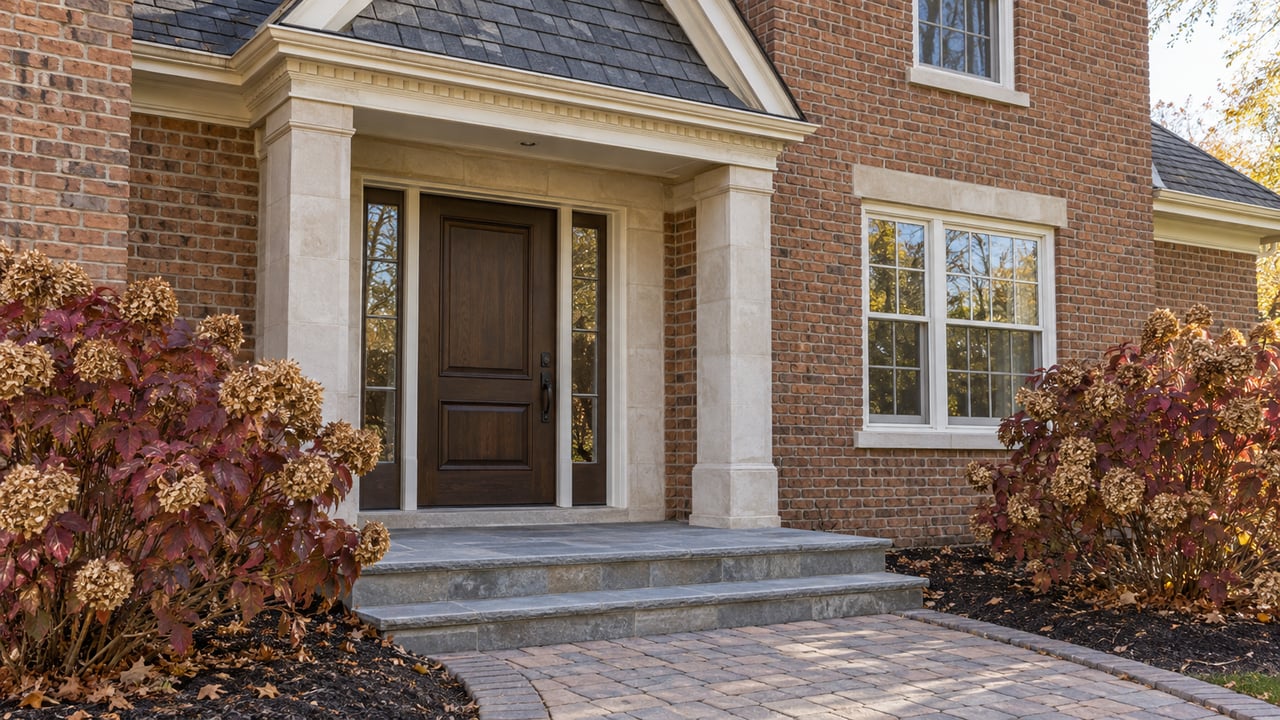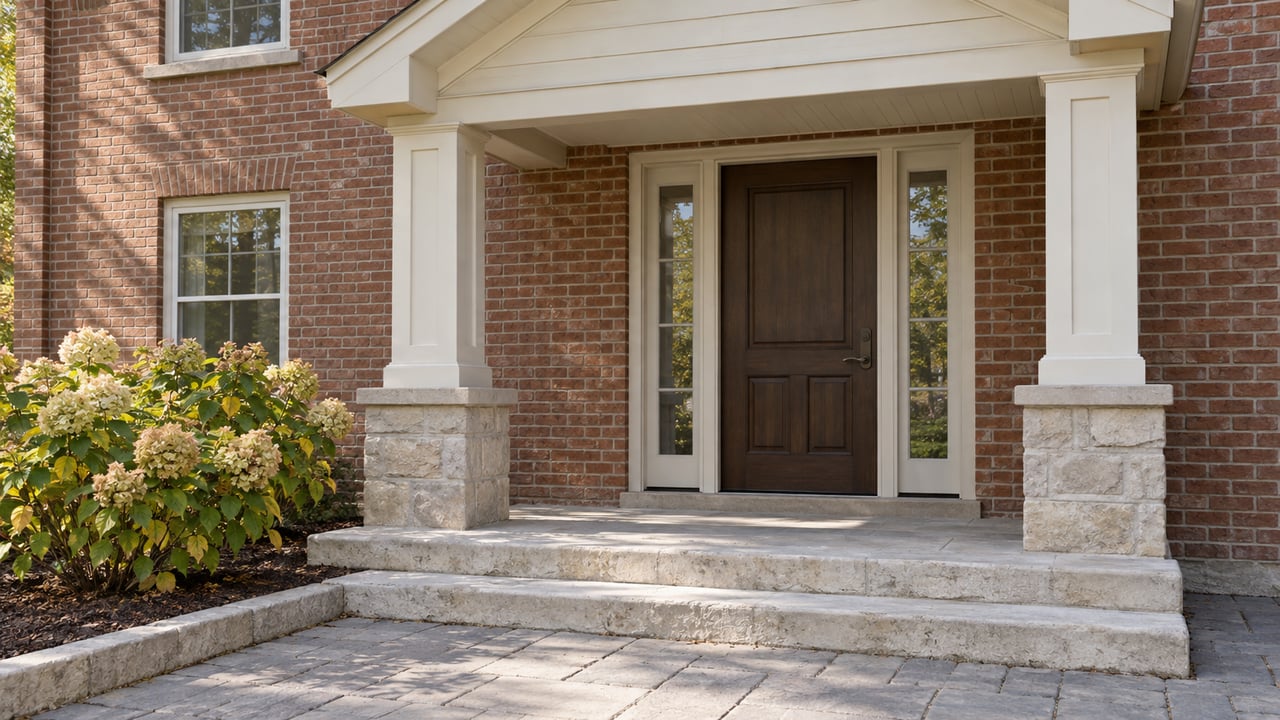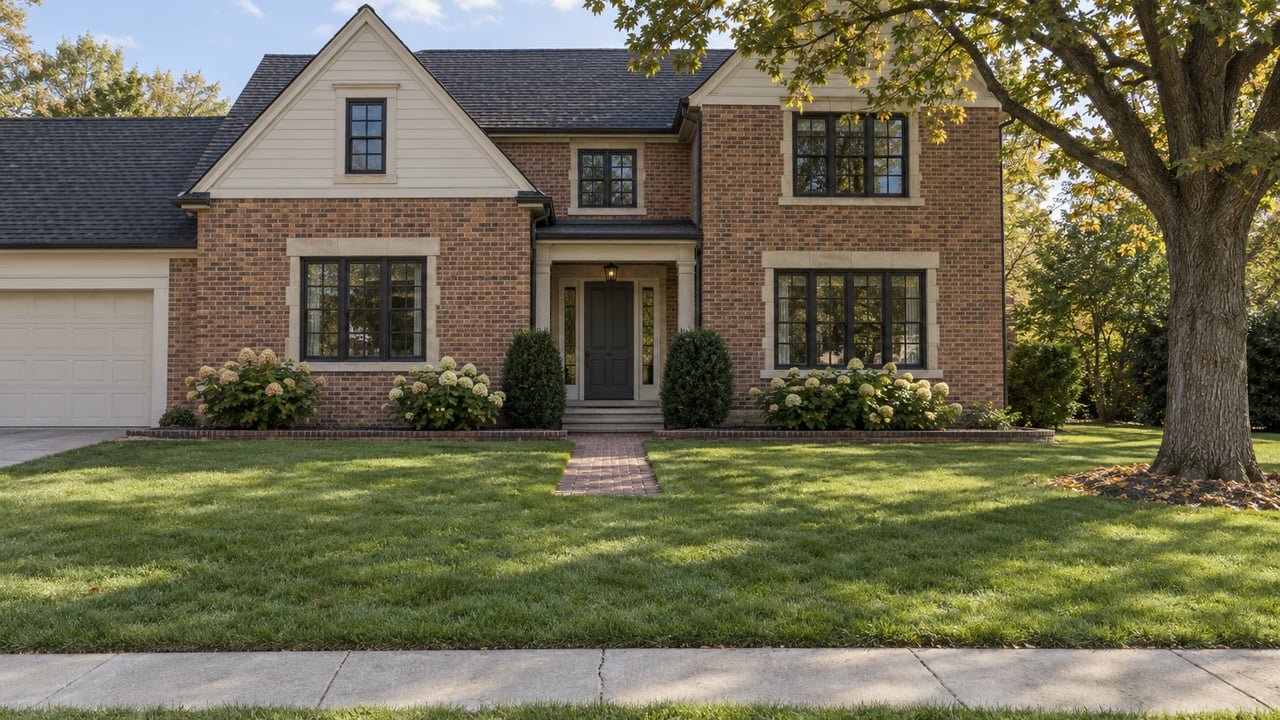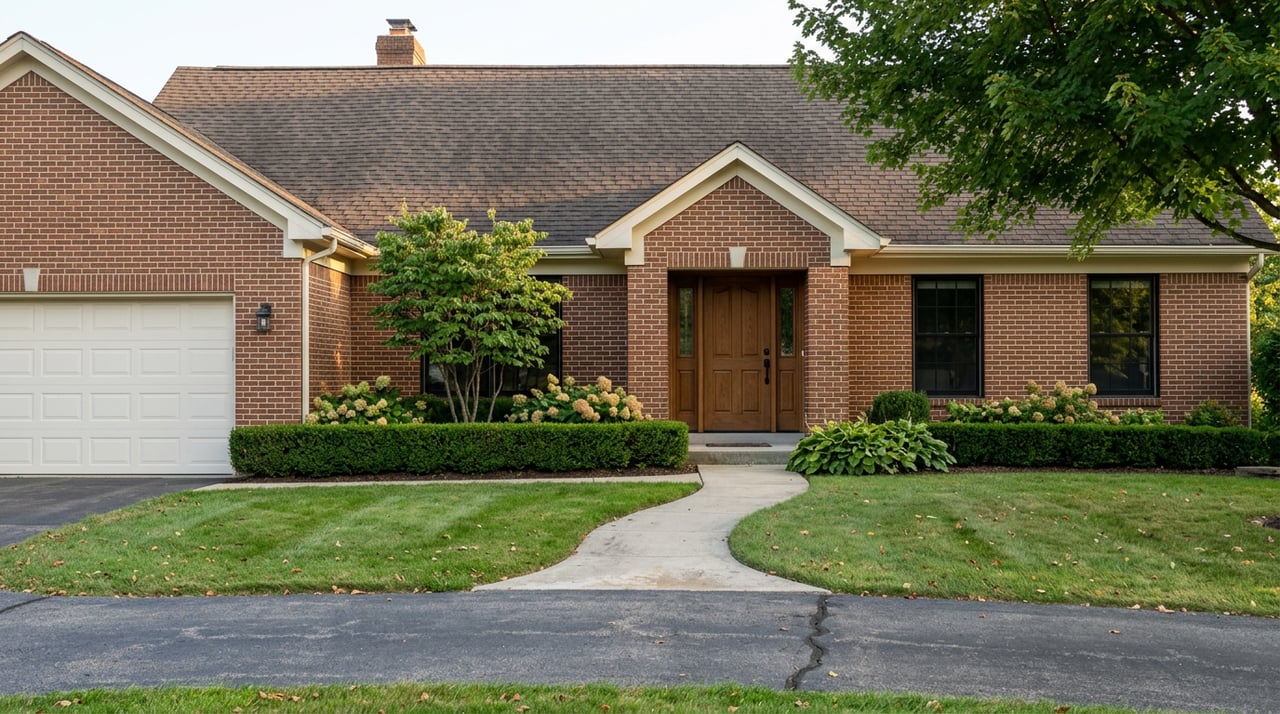
Picture two three-bedroom colonials, both listed at $650,000, both inside the Naperville city limits, both with a 60564 address on the sign out front. A buyer comparing them on a portal would treat them as identical starting points. They are not. One of those homes might be taxed by DuPage County. The other might be taxed by Will County. The difference in what each owner actually pays every year can run well into four figures, and nothing on the listing page tells you which one you're looking at.
That's the piece the median price leaves out. Naperville is routinely reported as a single market with a single number attached to it, somewhere between $590,000 and $700,000 depending on which source and which month you check. But the city itself is split down the middle by an actual county line, and that line does more to determine your real cost of ownership than almost any line item you'd negotiate on a contract.
Two Counties, One City Limit
Naperville sits mostly in DuPage County, with a southern portion extending into Will County. That's not a historical footnote. It's an active administrative split that runs through neighborhoods, streets, and in at least one documented case, a single ZIP code.
The two counties don't share a tax rate. Ownwell's DuPage County figures put Naperville's median effective property tax rate at around 2.05%, while its separate Will County figures for Naperville put the median effective rate at 2.35%. That's a 0.30 percentage point gap between two halves of the same city. A separate report from DuPage Policy Journal, citing BlockShopper data for the fourth quarter of 2025, put the citywide effective rate at roughly 2% and the median tax bill at $13,141 on a median sale price of $653,000 that quarter. The numbers don't line up neatly across sources, which is itself the point: nobody is publishing one clean "Naperville tax rate" because there isn't one.
The ZIP Code Doesn't Settle It Either
Buyers who know about the county split often assume they can shortcut the problem by checking the ZIP code. That doesn't fully work either.
The 60540 ZIP code shows up on both counties' tax tables. Ownwell's DuPage County data lists 60540 with a median tax bill running as high as $9,936. Its Will County data, covering the same 60540 ZIP, lists a median bill starting around $7,766. Same three digits on the envelope, two different county governments sending the actual bill, and two very different numbers depending on which parcel you're standing on. The 60564 and 60565 ZIP codes carry similar overlap, with the Will County portions generally corresponding to newer construction on larger lots and the DuPage portions running through the older, closer-to-downtown blocks.
USPS draws ZIP boundaries around mail delivery routes, not county lines, so this overlap isn't a data error. It's a structural fact of how the city grew, and it means the ZIP code on a listing tells you almost nothing about which tax bill you're inheriting.
What the Rate Spread Actually Costs You
A 0.30 percentage point difference sounds small until you run it against a real price. Take the $650,000 figure that several sources have used for Naperville's citywide median sale price in 2026. A 0.30 point gap on that value works out to roughly $1,950 a year, or about $162 a month, before either owner applies a homestead exemption. That's not a rounding error. It's close to a car payment, and it exists purely because of which side of an invisible line the parcel sits on, independent of the home's size, age, or condition.
The School District Line Draws Its Own Map
Just to complicate the picture further, Naperville's two school districts don't follow the county line either. Naperville Community Unit School District 203, home to Naperville Central and Naperville North, generally covers the older, more walkable core, much of which sits in DuPage County. Indian Prairie Community Unit School District 204, home to Neuqua Valley, Metea Valley, and Waubonsie Valley, generally covers the newer subdivisions built since the 1990s, much of which sits toward the Will County side. Both districts are consistently well regarded, and the choice between them can depend on which high school's programs a buyer is considering rather than one being categorically better.
Some of the city's more recognizable subdivisions map cleanly onto one district or the other. Cress Creek, Hobson West, Stillwater, and Brighton Ridge fall under District 203. White Eagle, Tall Grass, and Ashbury fall under District 204. White Eagle is worth calling out specifically: the community straddles the DuPage-Will county line directly, meaning residents share the same school district and park district access while their municipal water, police, and fire coverage can differ from one lot to the next depending on which side of the line that particular parcel falls on.
Reassessment on Two Different Clocks
The friction doesn't stop at the tax rate. DuPage and Will counties don't reassess property on the same calendar. Each follows its own multi-year reassessment cycle, and a parcel in one county can be reassessed in a different year than a nearly identical parcel across the line in the other county. Billing follows the same pattern. DuPage County typically sends its two-installment bills in early summer and early fall each year, a cadence JVM Lending's guide to DuPage property taxes confirms held for the 2024 tax year installments due June 2 and September 2, 2025, with the same rhythm expected for the 2025 tax year billed in 2026. Will County runs its own separate schedule.
This matters at the negotiating table, not just at tax time. Illinois Official Records explains that if you ever need to appeal an assessment, you have to file with the correct county's Board of Review. A DuPage appeal filed on a Will County parcel simply won't be accepted, and vice versa. Buyers who assume "Naperville" means one county government are the ones most likely to lose time sorting this out after closing rather than before.
So Which Median Price Are You Even Looking At?
The county line problem has a quieter cousin: the median price itself changes depending on which basket of homes and which time window you use.
| Source | Time window | What's counted | Median price |
|---|---|---|---|
| Redfin trailing figures | 3 months ending May 2026 | All home types | $595,000 |
| Citywide snapshot | April 2026 | All home types | $590,000 |
| MRED trailing 12-month data | Through March 2026 | Detached single-family only | $699,000 |
| BlockShopper-sourced report | Q4 2025, 98 sales | All home types sold that quarter | $653,000 |
None of these numbers is wrong. They're measuring different things. A citywide figure that blends condos, townhomes, and detached homes will always sit lower than a detached-only figure, and a three-month window will move differently than a trailing twelve-month one. Anyone quoting a single Naperville median price without saying which of these baskets they mean is giving you less information than it sounds like.
Before You Write an Offer
If you're comparing Naperville listings against a home in another suburb, or against each other, a few checks take the guesswork out of the county question:
- Ask your agent to confirm whether the specific parcel is in DuPage or Will County before you build a monthly payment estimate around the listing's tax figure.
- Request the actual prior-year tax bill from the seller's county treasurer rather than relying on an estimated rate applied to the sale price.
- Confirm school district and specific attendance boundary with the district registrar directly, since boundaries shift independently of both the county line and the subdivision name.
- If you're comparing two homes at similar prices, ask what percentage of the price difference, if any, is actually a tax rate difference in disguise.
FAQ
Does a Naperville mailing address tell me which county I'm buying in? No. ZIP codes like 60540 and 60565 include parcels in both DuPage and Will counties, so the address alone doesn't confirm which county will send your tax bill.
Can a home's school district assignment change after I buy? Both Naperville districts periodically adjust attendance boundaries to balance enrollment or accommodate new construction, so a boundary check at the time of purchase reflects that specific moment rather than a permanent guarantee.
Is the Will County side of Naperville actually cheaper to own in? Not necessarily. Ownwell's data shows a higher median effective tax rate on the Will County side, so any lower sticker price there needs to be weighed against a higher ongoing tax bill before assuming it's the better deal.
Comparing Naperville homes means comparing more than square footage and finishes. If you're weighing options across the county line, school boundary, or both, Jeff L. Stainer can walk through the specific parcel details, current tax history, and district assignment for any address you're considering. Reach out for a free home valuation and a clear read on what a given price actually includes.
This article is general information, not legal, tax or financial advice. Consult a qualified professional about your situation.